Independent woodworking planning guide
Woodworking projects for small spaces
A project may fit on your desk when finished but still need room to cut, clamp, assemble and finish.
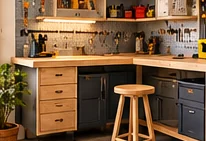
Choose projects by the longest operation
A pencil holder or coaster set can use short stock; a long shelf needs more feed and outfeed room even if the final shelf is narrow. Start with our free project library and compare material lengths, not only finished dimensions.
Use a temporary work surface
A stable, appropriately secured surface and suitable clamping matter more than a permanent workshop. Do not cut unsupported stock or use household furniture that can tip under tool forces.
Control dust, fumes and noise
Sanding creates fine dust; finishes may require ventilation and specific protective equipment. Follow product safety information, protect others sharing the space and respect local noise restrictions.
Store materials safely
Keep sharp tools inaccessible to children and pets, store finishes as their labels require and avoid leaning long boards where they can fall. Leave a clear exit and avoid routing cords across walkways.
Build a realistic first-project sequence
Try a small sanding block, coasters or pencil holder before a large shelving or workbench build. For layout planning, see our small workshop guide.
Plan the working clearance, not just storage
A compact project may still require a long clear path to cut its stock. Measure the room with the door open, identify where offcuts will land and make sure you can secure a workpiece without blocking an exit. Choose project dimensions based on the space needed to handle the largest part, not only the finished object.
For an apartment or shared room, compare the noise, dust and ventilation requirements of each operation before buying tools. A small hand-tool project may be more practical than a large plywood cabinet, even if both fit on the finished shelf. Arrange safe material storage and cleaning before starting; a folding worktop is not automatically stable enough for every operation.